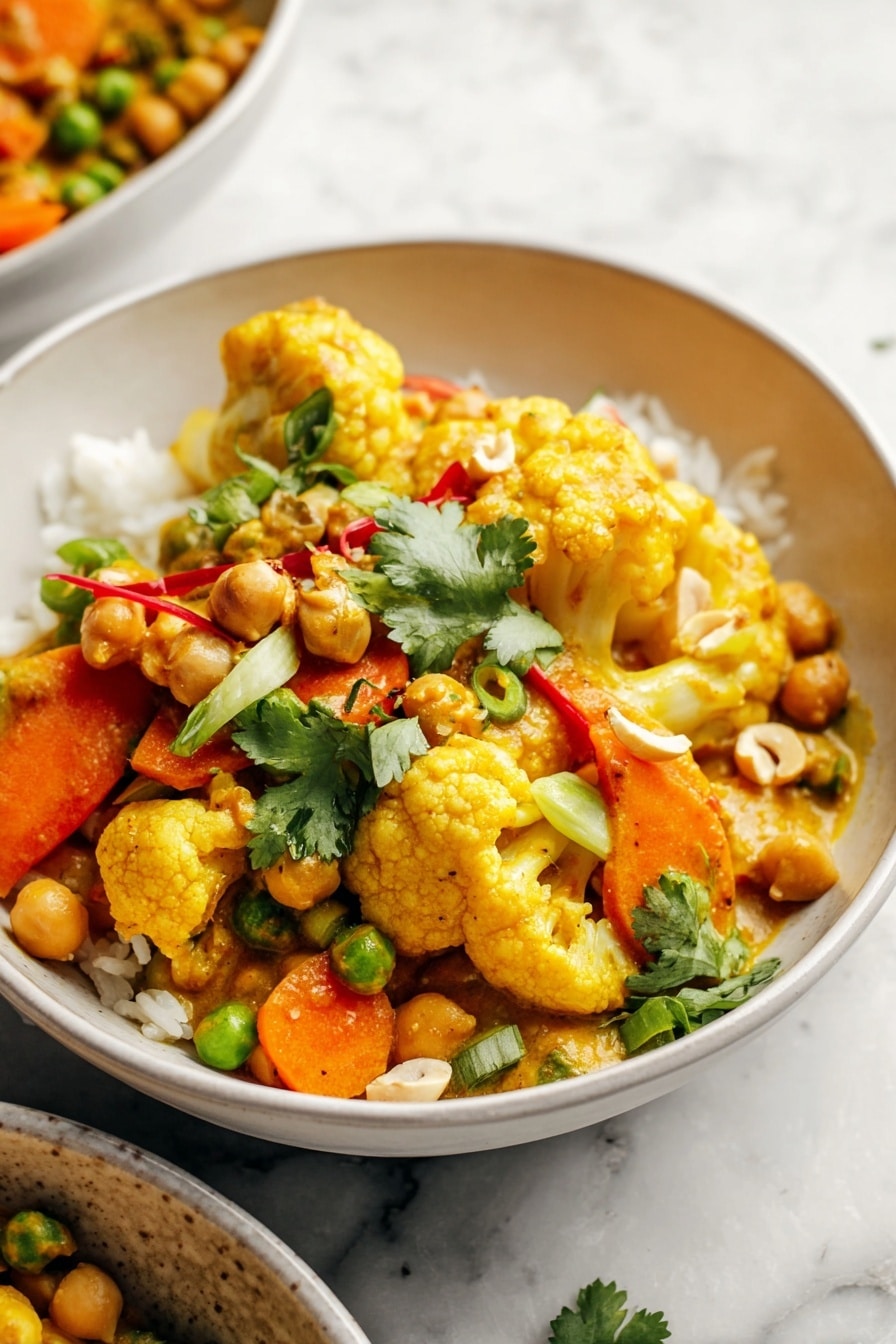
If you’re craving something that’s rich, comforting, and packed full of flavors that dance on your tongue, you are absolutely going to adore this Thai Coconut Cauliflower Chickpea Curry Recipe. I promise, it’s super easy to whip up, and every spoonful is a delightful mix of creamy coconut, spicy warmth, and nutty goodness that feels like a big hug from the inside out. Trust me, once you try this, it’ll become a favorite go-to, perfect for weeknights or whenever you want to impress without sweating it out in the kitchen.
Why You’ll Love This Recipe
- Simple yet Flavorful: With just a handful of pantry staples, you get a curry that tastes like it took hours to prepare.
- Plant-Powered Goodness: The chickpeas and cauliflower create a hearty meal that’s both filling and nourishing.
- Perfect Balance of Creamy and Spicy: The coconut milk and peanut butter mellow out the heat from the red curry and cayenne.
- Flexible and Customizable: You can easily tweak the veggies or spice level to suit your taste or what you have on hand.

Ingredients You’ll Need
The magic of this Thai Coconut Cauliflower Chickpea Curry Recipe lies in simple, fresh ingredients that come together beautifully. When shopping, I always look for firm cauliflower heads and ripe bell peppers for the best texture and flavor.

- Coconut Oil: Adds a subtle nutty aroma and helps cook your aromatics without overpowering the curry flavor.
- Garlic: Freshly minced for that punch of aroma and natural sweetness as it cooks.
- Fresh Ginger: I love grating it fresh for that lively zing that instantly brightens the curry.
- Carrot: Thinly sliced carrot adds a slight sweetness and some texture contrast.
- Cauliflower: Breaking it into florets gives you those lovely bite-sized bits that soak up curry flavors.
- Green Onions: Adds freshness and a bit of crunch while cooking and also great for garnish.
- Coconut Milk (Lite): The creamy base that’s rich but not too heavy; it’s what makes the curry luscious.
- Water or Vegetarian Broth: For thinning out the sauce without losing flavor.
- Red Curry Paste: The soul of this curry with fragrant spices and a spicy kick.
- Creamy Peanut Butter: Or cashew butter if you prefer — this adds a lovely nuttiness and richness.
- Gluten-Free Soy Sauce or Coconut Aminos: A touch of saltiness and umami.
- Ground Turmeric: Gives an earthy depth and its beautiful golden hue.
- Cayenne Pepper: Adds heat — feel free to adjust here based on your spice tolerance.
- Salt: Essential for balancing out flavors.
- Red Pepper: Julienne it for that crisp, sweet pop.
- Chickpeas: Rinsed and drained to add hearty plant-protein and texture.
- Frozen Peas: Tossed in at the end for a splash of bright color and natural sweetness.
Variations
I love making this recipe my own by swapping in whatever veggies I have or adjusting the spice level depending on the mood in the kitchen. It’s versatile enough to accommodate lots of tweaks, so don’t be afraid to experiment!
- Swap Your Veggies: I’ve replaced cauliflower with broccoli or even diced sweet potatoes — both worked like a charm.
- Add More Heat: If you’re a spice lover like me, a little extra cayenne or a few chopped fresh chilies turn up the volume.
- Make It Nut-Free: Use sunflower seed butter instead of peanut butter for those with allergies.
- Protein Boost: Toss in some tofu cubes or tempeh for added protein and texture.
How to Make Thai Coconut Cauliflower Chickpea Curry Recipe
Step 1: Sauté Your Aromatics and Veggies
Start by heating coconut oil in a large, deep skillet over medium-high heat — I use a 10-inch pan for perfect space. Toss in minced garlic and freshly grated ginger, cooking them just for about 30 seconds until fragrant; don’t let them brown or burn as that can add bitterness. Then, add your diced green onions, carrot slices, and cauliflower florets. Sauté for 3-5 minutes until the cauliflower edges start turning a lovely golden brown and the onions soften. This step builds the flavor base, so don’t rush it!
Step 2: Add the Coconut Milk and Curry Essentials
Next, pour in the lite coconut milk and water or veggie broth. Stir in the red curry paste, peanut butter, soy sauce (or coconut aminos), turmeric, cayenne pepper, and salt. Make sure everything’s combined well — you’ll notice the sauce turning a beautiful golden-orange with a creamy, velvety texture. This is where the curry really comes alive.
Step 3: Simmer with Peppers and Chickpeas
Throw in the julienned red bell pepper and the drained chickpeas. Lower the heat to medium-low and let everything simmer gently for about 10 minutes. This simmer lets the flavors meld and the veggies soften perfectly without losing their bite. Don’t forget to taste at this point and adjust the seasonings — maybe you want a pinch more salt or a bit more heat.
Step 4: Finish with Peas & Serve
Last, but definitely not least, stir in the frozen peas. They only need about a minute to defrost and warm up, and then you can dish it out. The peas add a beautiful pop of color and a hint of sweetness. Serve your curry hot, garnished with fresh cilantro, chopped green onions, and crunchy peanuts or cashews for texture. My family goes crazy for this combo every single time!
Pro Tips for Making Thai Coconut Cauliflower Chickpea Curry Recipe
- Build Flavor Gradually: Don’t skip the initial sauté of garlic, ginger, and veggies — it’s key to a deeply flavored curry.
- Use Fresh Ginger: I tried using powder once and it just didn’t compare, so grate fresh whenever possible for brightness.
- Adjust Spice Levels: Start small with cayenne and red curry paste; you can always add a pinch more after simmering.
- Avoid Overcooking Veggies: Keep cauliflower slightly crisp – it holds up better in meal preps and tastes fresher.
How to Serve Thai Coconut Cauliflower Chickpea Curry Recipe
Garnishes
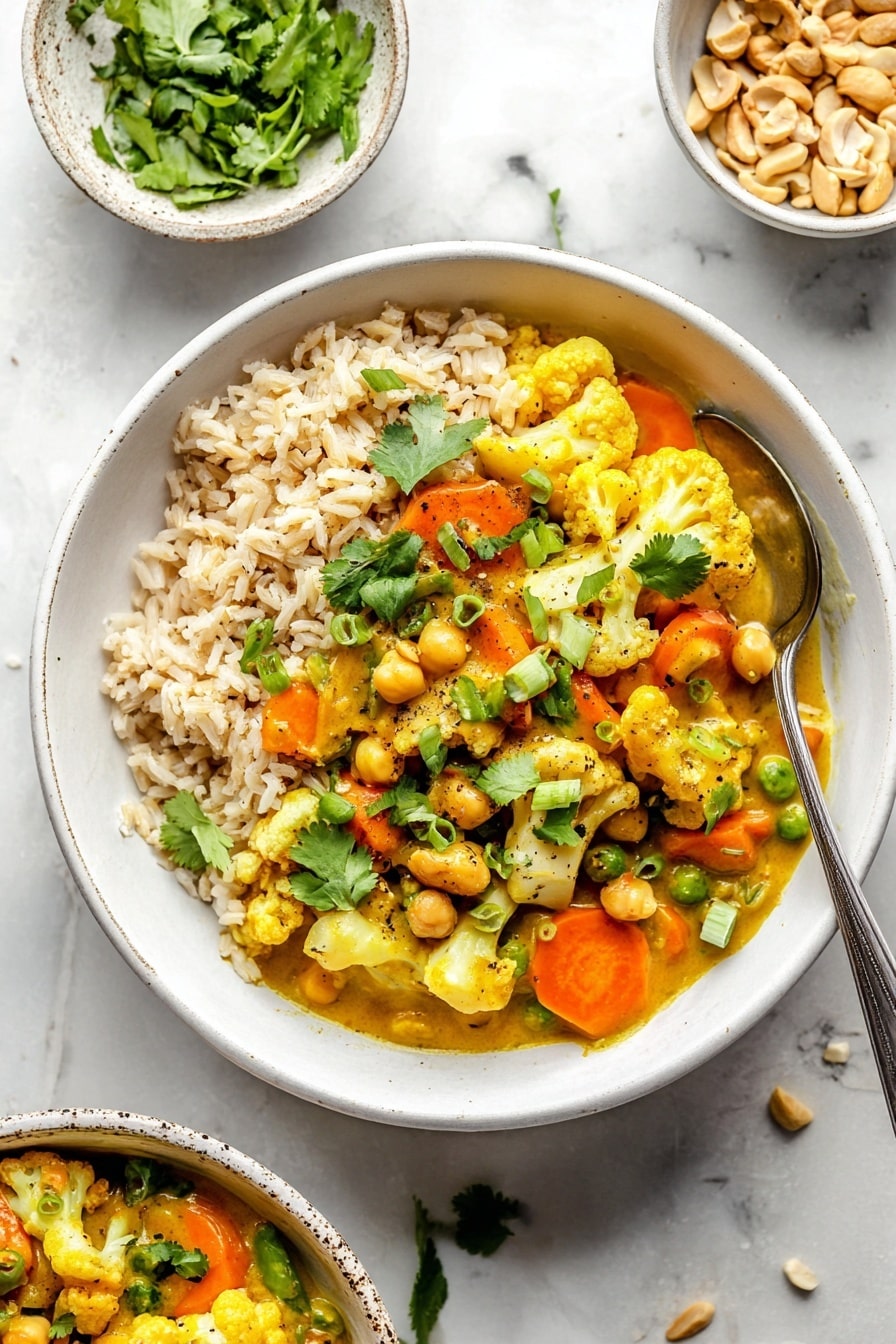
I always finish this curry with a handful of fresh cilantro and sliced green onions — they add freshness and vibrant color. A sprinkle of chopped peanuts or cashews brings in a satisfying crunch and extra nuttiness that contrasts beautifully with the creamy sauce.
Side Dishes
Serve it over steaming brown rice or fluffy quinoa to make it a complete protein meal. Sometimes, if I’m feeling fancy, I’d serve with a side of lightly sautéed kale or spinach to add a bright, green element that balances the richness.
Creative Ways to Present
For special dinners, I like serving this curry in individual coconut bowls or colorful bamboo bowls. Layered with fresh herbs and a wedge of lime on the side, it looks like a dish from a cozy Thai street market — and feels like a treat for guests!
Make Ahead and Storage
Storing Leftovers
After the curry cools down, I transfer leftovers to airtight containers and store them in the fridge. It keeps wonderfully for up to 4 days, and the flavors often deepen — making it even better the next day.
Freezing
This Thai Coconut Cauliflower Chickpea Curry Recipe freezes well too. I portion it into freezer-safe containers and pull portions out on busy nights. Just be sure to thaw it overnight in the fridge for the best texture.
Reheating
I reheat the curry gently on the stovetop over low heat, stirring occasionally to prevent sticking. If it thickens too much, a splash of water or coconut milk helps bring back that silky sauce consistency.
FAQs
-
Can I make this Thai Coconut Cauliflower Chickpea Curry Recipe vegan?
Absolutely! The recipe is naturally vegan and plant-based since it uses coconut milk, peanut butter, and veggies with no animal products. Just ensure any soy sauce or curry paste you use is vegan-friendly, as some brands may contain shrimp paste.
-
What can I use if I don’t have red curry paste?
If you don’t have red curry paste on hand, you can try making a quick blend of red chili flakes, garlic, ginger, and a touch of turmeric and coriander to mimic some of the flavor profile, but the curry paste really adds that authentic taste. Sometimes store-bought Thai curry powder can be an alternative.
-
Is this recipe spicy?
It has a nice mild to medium heat because of the red curry paste and cayenne pepper, but you can always dial it up or down depending on your taste. I usually start with the recommended amount and then add more cayenne if we want some extra kick.
-
Can I use other nuts instead of peanuts?
Definitely! I’ve swapped peanut butter with cashew butter and even almond butter. Each brings a slightly different flavor, but all add that creamy, nutty richness that makes the curry special.
Final Thoughts
This Thai Coconut Cauliflower Chickpea Curry Recipe has become a staple in my kitchen because it’s simple, nourishing, and downright delicious every single time. I love how it warms you up without feeling heavy, and how the ingredients come together so effortlessly. I really hope you give it a try — it’s the kind of recipe you’ll want to make again and again, perfect for sharing with friends or just treating yourself to a cozy, crave-worthy meal.
Print
Thai Coconut Cauliflower Chickpea Curry Recipe
- Prep Time: 15 minutes
- Cook Time: 15 minutes
- Total Time: 30 minutes
- Yield: 4 servings
- Category: Main Course
- Method: Stovetop
- Cuisine: Thai
- Diet: Gluten Free
Description
This Thai Peanut Coconut Cauliflower Chickpea Curry is a vibrant, hearty, and plant-based dish packed with flavor and texture. Featuring a creamy coconut milk base enriched with spicy red curry paste, peanut butter, and warming turmeric, this recipe blends fresh vegetables like cauliflower, carrots, and bell peppers with protein-rich chickpeas. Garnished with crunchy peanuts and fresh cilantro, this curry is perfect served over brown rice or quinoa for a wholesome, nourishing meal that’s both gluten-free and vegan-friendly.
Ingredients
For the Curry:
- ½ tablespoon coconut oil
- 3 cloves garlic, minced
- 1 tablespoon freshly grated ginger
- 1 large carrot, thinly sliced
- 1 small head cauliflower, broken into florets (3-4 cups)
- 1 bunch green onions, diced
- 1 (15 ounce) can lite coconut milk
- ⅓ cup water or vegetarian broth
- 2 tablespoons red curry paste
- 2 tablespoons natural creamy peanut butter (or cashew butter)
- ½ tablespoon gluten-free soy sauce or coconut aminos
- ½ teaspoon ground turmeric
- ½ teaspoon cayenne pepper, plus more if you like heat
- ½ teaspoon salt
- 1 red pepper, julienned
- 1 (15 ounce) can chickpeas, rinsed and drained
- ½ cup frozen peas
To Garnish:
- Fresh cilantro
- Green onion
- Chopped peanuts or cashews
Instructions
- Prepare the base: Place a large deep 10-inch skillet or pot over medium-high heat. Add the coconut oil, minced garlic, and grated ginger. Cook for 30 seconds until fragrant, then add diced green onions, sliced carrot, and cauliflower florets. Sauté for 3-5 minutes until the cauliflower starts to turn light golden brown and onions soften.
- Add liquids and spices: Pour in the lite coconut milk and water (or vegetarian broth), then stir in red curry paste, creamy peanut butter, gluten-free soy sauce or coconut aminos, cayenne pepper, ground turmeric, and salt. Mix thoroughly to combine all ingredients into a flavorful curry base.
- Simmer with vegetables and chickpeas: Stir in the julienned red pepper and rinsed chickpeas. Reduce heat to medium-low and let the curry simmer gently for 10 minutes to allow flavors to meld. Taste and adjust seasoning if needed.
- Finish with peas: Before serving, stir in the frozen peas and simmer for an additional minute, allowing the peas to warm through without losing their vibrant color.
- Serve and garnish: Divide the curry into bowls or meal prep containers. Garnish with fresh cilantro, additional chopped green onion, and chopped peanuts or cashews. Serve alongside brown rice or quinoa for a complete, protein-packed vegan meal. Enjoy!
Notes
- This recipe is naturally gluten-free and vegan, making it suitable for various dietary preferences.
- Adjust the cayenne pepper quantity to control the heat level according to your taste.
- For a nuttier twist, substitute peanut butter with cashew butter.
- Use vegetable broth instead of water for a richer flavor.
- Leftovers keep well refrigerated for up to 4 days and also freeze well.
- Add a squeeze of lime juice at the end for a fresh citrusy brightness, if desired.
Nutrition
- Serving Size: 1 serving (about 1/4 of recipe)
- Calories: 320
- Sugar: 6g
- Sodium: 460mg
- Fat: 18g
- Saturated Fat: 10g
- Unsaturated Fat: 7g
- Trans Fat: 0g
- Carbohydrates: 32g
- Fiber: 7g
- Protein: 10g
- Cholesterol: 0mg