If you’re anything like me, mornings can get hectic, and finding a breakfast that’s both quick and nourishing sometimes feels impossible. That’s why I’m so excited to share this Protein Pancake Recipe with you—it’s seriously a game-changer. These pancakes are fluffy, packed with protein, and surprisingly simple to whip up, making them my go-to whether I have a little or a lot of time before heading out the door. Trust me, once you try this, breakfast will never be the same!
Why You’ll Love This Recipe
- Protein-Packed Goodness: These pancakes serve up a hearty amount of protein to keep you energized all morning.
- Simple Ingredients: You probably already have everything in your pantry or fridge, making it easy to get started.
- Fluffy & Satisfying: The batter keeps the pancakes thick and tender, so you’re not left feeling hungry an hour later.
- Versatile & Adaptable: Whether you prefer whey or vegan protein, or want to tweak flavors, this recipe welcomes your personal touch.

Ingredients You’ll Need
To get that perfect protein pancake texture and flavor, a few key ingredients come into play. Each one plays a role to give you a pancake that’s tender, slightly sweet, and packed with nutrients. Here’s a bit on why I love these components and some tips to make shopping easier.

- Oat Flour: I find oat flour gives the pancakes a great hearty texture without being dense, plus it’s naturally gluten-free if you use certified oats.
- Vanilla Protein Powder: You can use whey or a vegan option—each affects the batter slightly, so check the notes below on milk adjustments.
- Cottage Cheese: Sounds unusual in pancakes, but it adds moisture and protein, keeping things fluffy.
- Eggs: Bind everything together and contribute to that classic pancake richness.
- Honey: Just enough natural sweetness to keep these pancakes feeling indulgent but not overly sweet.
- Baking Powder: This helps the batter rise beautifully, creating those fluffy layers we love.
- Milk or Milk Alternative: Needed to balance the batter consistency; adjust depending on your protein powder choice.
Variations
I’ve had fun tweaking this Protein Pancake Recipe over time, and honestly, the best part is making it your own! Whether you want to boost nutrition, accommodate dietary preferences, or play with flavors, there’s room for your creativity here.
- Flavor Swaps: Adding cinnamon, nutmeg, or even cocoa powder can completely reorder the flavor profile—I love a little cinnamon with vanilla protein.
- Fruit Add-Ins: Toss in fresh blueberries, chopped bananas, or even grated apple right into the batter before cooking for bursts of natural sweetness.
- Dairy-Free Version: Use a plant-based cottage cheese alternative or swap it for Greek-style yogurt if you’re avoiding dairy.
- Nut Butter Boost: Stir in a tablespoon of almond or peanut butter for extra richness and more protein.
How to Make Protein Pancake Recipe
Step 1: Blend to a Thick, Smooth Batter
I like to start with a high-powered blender—it’s the secret to avoiding any lumps or those tiny cottage cheese curds sneaking through. Begin by adding just 2 tablespoons of your milk or milk alternative, then blend. If your protein powder is vegan-based, be prepared to add more liquid (up to 4 tablespoons). The goal? Thick but scoopable batter—not runny. A quick scrape of the sides and another brief blend will get you to perfection without overdoing it.
Step 2: Cook Low and Slow for Fluffy Pancakes
Heat your non-stick skillet on low-medium and lightly oil it. Here’s a heads-up: these pancakes won’t bubble like traditional ones, so watch for firm edges and a nicely browned bottom before flipping. I use a 2-ounce cookie scoop to get evenly sized pancakes that cook evenly. Browning can happen faster than you expect, so don’t hesitate to dial the heat down if you see things cooking too rapidly.
Step 3: Patience Makes Perfect Pancakes
Once flipped, cook the other side until it’s golden but not burnt. The ingredients here tend to darken pancakes more than your usual recipe, which threw me off at first—I assumed my pancakes were overcooked when they weren’t. Keeping a close eye the first few times will really pay off.
Step 4: Serve Warm and Enjoy!
Remove your pancakes and stack them high. It’s best to serve these warm right off the skillet. I almost always dive right in, but if you’re making a batch, cover them loosely with foil to keep them cozy.
Pro Tips for Making Protein Pancake Recipe
- Keep Batter Thick: I learned the hard way that thinning the batter too much results in flat pancakes. The thickness really holds that fluffy rise.
- Watch the Heat Closely: Starting on medium heat can char the outsides before the middle cooks; low-medium is your best bet for even cooking.
- Don’t Expect Bubbles: Unlike regular pancakes, these don’t bubble, so instead check for firm edges and browning to know when to flip.
- Adjust Milk by Protein Type: Vegan protein powders often absorb more liquid; add milk gradually to avoid a batter that’s too runny.
How to Serve Protein Pancake Recipe
Garnishes
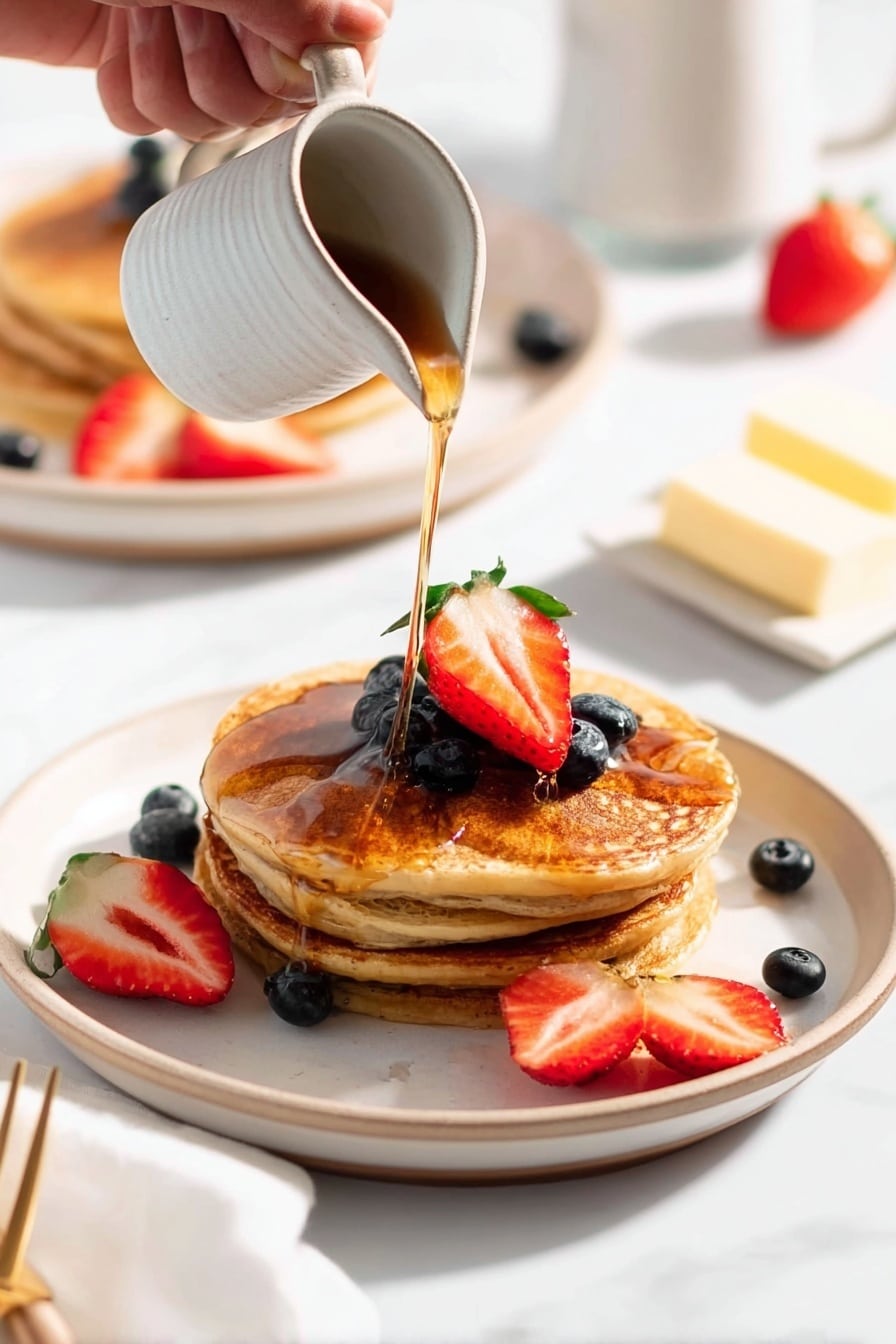
My go-to toppings are fresh berries drizzled with a little maple syrup or honey for sweetness, plus a dollop of Greek yogurt for creaminess and a protein boost. On weekends, I love smearing some nut butter for a rich finish. Trust me; these garnishes elevate the pancakes to brunch-level indulgence without losing the healthy edge.
Side Dishes
Pair these protein pancakes with crispy turkey bacon or scrambled eggs for a filling meal that balances carbs and extra protein beautifully. Fresh fruit salad or a smoothie on the side can add that refreshing zing I crave in the morning.
Creative Ways to Present
For a special occasion, I’ve stacked these pancakes into a tall tower, layering in fresh fruit and a drizzle of chocolate sauce between each. Add some edible flowers or a sprinkle of chia seeds for a lovely touch. It’s fun, impressive, and makes breakfast feel like a celebration.
Make Ahead and Storage
Storing Leftovers
When I have leftovers, I cool the pancakes completely and stack them in an airtight container, separating each layer with parchment or wax paper to prevent sticking. Stored in the fridge, they stay good for up to three days—perfect for a quick breakfast grab.
Freezing
I’ve frozen these pancakes by laying them out on a baking sheet first to freeze individually, then transferring to a zip-top freezer bag. This way, you can pull out just the amount you need. They freeze beautifully and thaw quickly.
Reheating
The best way I’ve found to reheat is in a toaster or toaster oven—this keeps the edges crispy without drying out the inside. Microwave works in a pinch, but the texture softens a bit. If you’re reheating multiple pancakes, a low oven heat wrapped in foil also does the trick.
FAQs
-
Can I use other types of flour in this Protein Pancake Recipe?
Absolutely! While oat flour is my favorite for this recipe because it creates a great texture, you can substitute with whole wheat flour, almond flour, or even a gluten-free flour blend. Keep in mind different flours affect the moisture and cooking time, so you might need to adjust the milk slightly.
-
What’s the best protein powder to use?
I’ve had success with both whey and vegan vanilla protein powders. Whey typically needs less milk because it absorbs less liquid, while vegan powders often require a bit more to get the right batter thickness. Pick whatever suits your dietary preferences—this recipe is pretty forgiving!
-
Why don’t the pancakes bubble like regular pancakes?
Great question! These pancakes contain cottage cheese and protein powder, which change the batter’s structure and how it cooks. Instead of bubbles, look for firm edges and a browned bottom to know when to flip—it’s a bit different but just as effective.
-
Can I make this recipe vegan?
Yes, with some swaps! Use a plant-based protein powder and replace cottage cheese with a vegan alternative or thick plant-based yogurt. Also, swap eggs for flax eggs or a commercial egg replacer. Texture might differ slightly, but it’s still delicious.
Final Thoughts
I can’t emphasize enough how this Protein Pancake Recipe has made my mornings brighter and healthier—and I hope it does the same for you! It’s simple, nourishing, and flexible enough to fit into whatever lifestyle or taste buds you’re working with. Give it a try and see how it becomes your new breakfast staple—you’ll be amazed at how something so quick can feel so satisfying and special.
Print
Protein Pancake Recipe
- Prep Time: 5 minutes
- Cook Time: 10 minutes
- Total Time: 15 minutes
- Yield: 4 servings
- Category: Breakfast
- Method: Stovetop
- Cuisine: American
- Diet: Low Fat
Description
This Protein Pancake recipe is a quick and nutritious breakfast option featuring oat flour, protein powder, cottage cheese, eggs, and honey. Blended to a thick batter and cooked on a skillet, these pancakes are fluffy, protein-packed, and perfect for starting your day with sustained energy. Whether you use whey or vegan protein powder, the recipe adapts to your dietary preferences and is easy to prepare in under 15 minutes.
Ingredients
Dry Ingredients
- 2/3 cup oat flour
- 1/4 cup vanilla protein powder (whey or vegan, see notes)
- 2 teaspoons baking powder
Wet Ingredients
- 3/4 cup cottage cheese
- 2 large eggs
- 2 tablespoons honey
- 2 tablespoons milk or milk alternative (adjust as needed)
Instructions
- Blend the Batter: Place oat flour, protein powder, baking powder, cottage cheese, eggs, honey, and 2 tablespoons of milk or milk alternative into a high-powered blender. Blend for several seconds, adding more milk one tablespoon at a time if needed to achieve a thick batter consistency. Scrape down the sides with a spatula and blend again until smooth, avoiding over mixing to keep some texture.
- Preheat Skillet: Heat a non-stick skillet over low to medium heat. Lightly grease the skillet with cooking oil or spray to prevent sticking.
- Cook Pancakes: Using a 2-ounce cookie scoop or large spoon, scoop batter onto the skillet. Cook on the first side until the bottom is browned; the batter won’t bubble like traditional pancakes, so look for firm edges and check the bottom to avoid burning. Adjust heat as necessary to ensure even cooking.
- Flip and Finish: Carefully flip the pancakes and cook the other side until browned and cooked through. These pancakes will be slightly darker in color due to the ingredients used.
- Serve Warm: Remove cooked pancakes from the skillet and repeat with remaining batter. Serve immediately with your favorite toppings.
Notes
- Keep the batter thick for fluffier pancakes and better rise.
- Watch the pancakes closely as they brown faster and do not bubble like regular pancakes; look for firm edges as a sign to flip.
- Store leftovers in the refrigerator for up to 3 days.
- Adjust milk quantity depending on protein powder type: whey protein requires less milk, vegan protein may need more.
Nutrition
- Serving Size: 1 serving (about 2 pancakes)
- Calories: 230
- Sugar: 7g
- Sodium: 220mg
- Fat: 6g
- Saturated Fat: 2g
- Unsaturated Fat: 3g
- Trans Fat: 0g
- Carbohydrates: 27g
- Fiber: 4g
- Protein: 20g
- Cholesterol: 100mg