If you’re craving something rich, comforting, and truly impressive, then you’re going to want to dive right into this Port Braised Lamb Shanks Recipe. I absolutely love how the slow braising transforms these meaty shanks into fall-off-the-bone perfection, soaked in a luscious port and red wine sauce that’s both deep and slightly sweet. Trust me, once you make this, it’s going to become one of those ‘go-to’ recipes you pull out when you want to wow your family or guests without fussing over fancy techniques.
Why You’ll Love This Recipe
- Rich & Flavorful: The combination of port, red wine, and slow braising makes the sauce incredibly deep and complex.
- Tender Meat Every Time: Braising gently breaks down the lamb shanks to melt-in-your-mouth tenderness that’s hard to beat.
- Simple Ingredients: You’ll find most of what you need in your pantry, and I share tips on budget-friendly wines and ports.
- Perfect for Entertaining: It looks impressive and tastes amazing, but much of the work is hands-off, so you can relax with your guests.

Ingredients You’ll Need
These ingredients come together to build the ultimate slow-cooked lamb masterpiece. I always recommend buying lamb shanks that are about the same size so they cook evenly. Also, don’t be intimidated by the port and wine — I use affordable bottles that work just fine to create that amazing sauce.

- Lamb shanks: Look for shanks with good marbling; they’ll get beautifully tender and flavorful.
- Olive oil: Divided for browning the lamb and sautéing the veggies, use a good quality one for best flavor.
- Garlic cloves: Freshly minced to perk up the sauce with aromatic depth.
- Onion: White or brown onions both work great; finely chopped for sweetness and body in the braise.
- Celery stalks: Optional but highly recommended — celery adds a lovely subtle freshness.
- Carrot: Another optional but wonderful addition that rounds out the flavor profile.
- Flour: Helps thicken the sauce slightly as it cooks; don’t skip this step or the sauce will be thinner.
- Beef broth: Adds savory depth; chicken broth works if that’s what you have on hand.
- Port: You don’t need to splurge here — a cheaper ruby or tawny port gives beautiful rich notes.
- Red wine: Adds more complexity; use budget-friendly bottles or just swap with more broth if you prefer.
- Tomato paste: Keeps the sauce bright and helps with the thickness.
- Thyme: Fresh or dried both work—this herb is a classic pairing with lamb.
- Bay leaves: Bring a subtle woody aroma that amplifies the braise beautifully.
- Fresh parsley: For garnishing and a splash of vibrant green color when serving.
Variations
I love this recipe as is, but I also enjoy tweaking it a bit depending on what I have on hand or the occasion. Feel free to experiment — it’s all about making it your own!
- Protein swap: I once made this using beef cheeks instead — it was just as tender and packed with flavor, a wonderful variation when lamb isn’t available.
- No wine version: If you prefer to skip alcohol, doubling up on beef broth still creates a delightful sauce that’s just as comforting.
- Vegetarian twist: Swap lamb for hearty mushrooms and use vegetable broth for a cozy, flavorful vegetarian braise.
- Slow cooker option: When I’m busy, I use my slow cooker on low for 8 hours, then reduce the sauce on the stove to finish — super convenient and yields fantastic results.
How to Make Port Braised Lamb Shanks Recipe
Step 1: Season and Brown the Lamb Shanks
Start by seasoning your lamb shanks generously with salt and pepper — don’t be shy here as this really builds flavor. Heat a tablespoon of olive oil over high heat in a heavy pot or Dutch oven, then add two shanks at a time. You want to brown them on all sides until they’re golden and caramelized; this usually takes about 8-10 minutes per batch. Browning is key as it locks in rich flavor and adds depth to the final dish. Once browned, set the shanks aside and repeat for the remaining ones.
Step 2: Sauté Aromatics and Build the Base
Lower the heat to medium and add the remaining olive oil. Toss in the minced garlic, chopped onions, celery, and carrots. I always recommend including celery and carrots even if optional — they add a subtle sweetness and aromatic lift that you’ll appreciate in the final sauce. Cook this mixture gently for about 5 minutes until the onions soften and all the veggies start to mingle their flavors.
Step 3: Add Flour and Liquids
Sprinkle in the flour and stir it into the veggies, letting it cook out for a minute or two. This step helps thicken the sauce as it simmers. Then, pour in the beef broth, port, red wine, and tomato paste. Don’t worry if the mixture looks a bit lumpy—that’s completely normal; those lumps will dissolve during cooking. Add your thyme sprigs and bay leaves now for that classic herbaceous fragrance. Stir everything gently to combine.
Step 4: Braise the Lamb Shanks
Return the lamb shanks to the pot, making sure they’re mostly submerged in the liquid. Bring everything up to a gentle simmer, then reduce the heat to medium-low and cover with a tight-fitting lid. Here’s where the magic happens — let the shanks braise gently for 2 hours. This slow cooking breaks down the tough connective tissue, turning the meat melt-in-your-mouth tender.
Step 5: Finish the Sauce and Serve
After the initial 2 hours, remove the lid and let the dish simmer uncovered for another 30 minutes to thicken the sauce a bit. Then, take the lamb out and optionally strain the sauce to make it perfectly smooth—this is the little “restaurant trick” I stumbled upon and love for a polished final touch. Skim off any excess fat, then turn the heat back up to medium-high and reduce the sauce by half until it gets syrupy. Slide the lamb back in to reheat, making sure the meat soaks up every bit of that sauce. Serve it over creamy mashed potatoes and sprinkle with fresh parsley for a pop of color and freshness.
Pro Tips for Making Port Braised Lamb Shanks Recipe
- Brown Thoroughly for Flavor: Never skip browning the lamb; it builds layers of flavor that you’ll taste in every bite.
- Affordable Port & Wine Work Well: I always use budget-friendly bottles (I shop at Dan Murphy’s and Aldi’s!) and you’d be surprised at how good it turns out.
- Optional Sauce Straining: Straining the sauce makes it smooth and elegant, but if you’re short on time, just skip it; it will still taste amazing.
- Cook Low and Slow: Keeping the heat low and patience high is the key to tender, flavorful lamb shanks every time.
How to Serve Port Braised Lamb Shanks Recipe

Garnishes
I personally love fresh parsley sprinkled on top—it adds a bright, herbal note that cuts through all the richness. Sometimes, I add a tiny drizzle of good-quality olive oil to finish it off, which just feels so indulgent and homey.
Side Dishes
Mashed potatoes are the classic partner here for a reason—they soak up all that gloriously thick sauce. I also enjoy roasted root vegetables or creamy polenta on the side to mix up the textures while keeping the cozy vibe going.
Creative Ways to Present
For special dinners, I like serving the lamb shanks on a large platter surrounded by the sauce and garnished with whole herb sprigs. A sprinkle of toasted pine nuts or slivered almonds adds an unexpected crunch. It’s simple touches like these that really impress without extra stress.
Make Ahead and Storage
Storing Leftovers
After cooling, I store leftovers in an airtight container in the fridge for up to 3 days. The meat actually tastes better the next day as the flavors have more time to meld.
Freezing
This recipe freezes wonderfully — just place cooled lamb shanks and sauce in a freezer-safe container or bag. When you thaw, the meat stays tender and the sauce keeps its richness, making weeknight meals super easy.
Reheating
I usually reheat gently on the stove over low heat to keep the lamb juicy and prevent the sauce from over-reducing. If reheating from frozen, it’s best to thaw overnight in the fridge first for even warming.
FAQs
-
Can I use other cuts of meat instead of lamb shanks?
Absolutely! Beef cheeks or chunky beef ribs work really well braised in this style. They have similar connective tissue that breaks down slowly, resulting in tender meat and a flavorful sauce.
-
Is it necessary to use port and red wine?
You don’t have to use expensive or even any alcohol if you prefer. I often use affordable or discounted bottles, and sometimes swap the wine for more beef broth. The slow cooking still creates a rich, delicious sauce.
-
Can I make this recipe in a slow cooker?
Yes! You can cook the lamb shanks on low for about 8 hours in a slow cooker, then transfer the sauce to a pot to reduce and thicken as per the recipe. It’s a hands-off method that still delivers fantastic flavor.
-
How do I know when the lamb shanks are done?
They’re ready when the meat is tender and easily pulls away from the bone. The 2.5-hour braise time is a reliable guideline, but if your shanks are larger or smaller, adjust accordingly.
-
Should I strain the sauce?
Straining is optional. It makes the sauce smoother and more refined, but if you don’t have time, you can serve it as is—the veggies and herbs add great texture and flavor.
Final Thoughts
This Port Braised Lamb Shanks Recipe holds a special place in my kitchen — it’s that perfect combo of simple prep, long slow cooking, and show-stopping flavor. I remember the first time I made it for friends; they were blown away by how tender the lamb was and how rich the sauce tasted without a fuss. I can’t recommend it enough if you want a dinner that feels genuinely special but doesn’t keep you stuck in the kitchen all evening. Give it a try, I promise you’ll be added to the fan club!
Print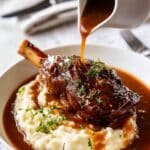
Port Braised Lamb Shanks Recipe
- Prep Time: 15 minutes
- Cook Time: 3 hours
- Total Time: 3 hours 15 minutes
- Yield: 4 servings
- Category: Main Course
- Method: Stovetop
- Cuisine: Australian
Description
This Port Braised Lamb Shanks recipe delivers tender, flavorful lamb slow-cooked in a rich sauce made from port, red wine, beef broth, and aromatic vegetables. Perfect for a comforting dinner, the lamb becomes fall-off-the-bone tender after simmering for hours, while the sauce reduces to a silky consistency, marrying sweet and savory notes. Garnished with fresh parsley and best served with creamy mashed potatoes, this dish is an exquisite yet approachable take on classic braised lamb.
Ingredients
Lamb Shanks and Seasoning
- 4 lamb shanks, approx 400g/13oz each
- Salt and pepper, to taste
- 2 tbsp olive oil, separated
Aromatics and Vegetables
- 2 garlic cloves, minced
- 1 onion, finely chopped (white, brown, or yellow)
- 1 celery stalk, finely chopped (optional but recommended)
- 1 carrot, finely chopped (optional but recommended)
Thickening and Liquids
- 3 tbsp / 1/4 cup flour (35g)
- 2 cups / 500 ml beef broth (or chicken broth as a substitute)
- 3 cups / 750 ml port (ruby or tawny)
- 1 1/2 cups / 375 ml red wine (or substitute with more beef broth)
- 3 tbsp / 1/4 cup tomato paste
Herbs and Flavorings
- 5 sprigs thyme or 2 tsp dried thyme
- 3 dried bay leaves (or 5 fresh bay leaves)
- 4 stalks fresh parsley (optional)
To Serve
- Fresh parsley, finely chopped
Instructions
- Season Lamb: Generously season the lamb shanks all over with salt and pepper to enhance flavor before browning.
- Brown Lamb Shanks: Heat 1 tbsp olive oil in a Dutch oven or heavy-based large pot over high heat. Add two lamb shanks and sear on all sides until well browned. Remove and repeat with the remaining shanks, setting them aside.
- Sauté Vegetables: Reduce heat to medium and add the remaining 1 tbsp oil. Add minced garlic, finely chopped onion, carrot, and celery. Sauté for about 5 minutes until the onion softens and the vegetables become fragrant.
- Add Flour: Sprinkle the flour over the softened vegetables and mix well to combine. This will help thicken the sauce.
- Add Liquids and Herbs: Pour in the beef broth, port, red wine, and tomato paste. Add thyme sprigs and bay leaves. Stir to combine; don’t worry if there are lumps as they will dissolve during cooking.
- Return Lamb and Simmer: Place the browned lamb back into the pot, ensuring the meat is mostly submerged in the liquid. Bring to a gentle simmer, then reduce heat to medium-low and cover with a lid.
- Long Slow Cook: Let the lamb simmer gently for 2 hours to become tender, then remove the lid and continue to simmer uncovered for an additional 30 minutes to reduce the sauce.
- Remove Lamb: Take the lamb shanks out of the pot and set them in a bowl.
- Optional Strain Sauce: Strain the sauce from the pot through a sieve into a bowl, pressing the solids to extract maximum flavor. Pour the strained sauce back into the pot for a smooth, lump-free finish.
- Skim Fat: Skim off any excess fat from the surface of the sauce to reduce greasiness.
- Reduce Sauce: Increase heat to medium-high and reduce the sauce by half or until it thickens to a syrupy consistency, intensifying flavor.
- Reheat Lamb: Return the lamb shanks and any accumulated juices to the pot to warm through in the reduced sauce.
- Serve: Serve the lamb shanks hot, garnished with freshly chopped parsley, alongside creamy mashed potatoes or your preferred side.
Notes
- This recipe also works wonderfully with beef cheeks or chunky beef ribs as alternative proteins.
- No need to use expensive port or wine; discount bottles work well for slow cooking and yield delicious results.
- Ruby port provides a redder sauce, while tawny port gives a deeper brown color; either works beautifully.
- Red wine adds depth but can be replaced with more beef broth for a milder flavor.
- For oven cooking, braise covered at 160°C (320°F) for 2 hours then uncovered for 30 minutes, then reduce sauce on the stove.
- Slow cooker method: Cook on low for 8 hours then reduce sauce on the stove as directed.
- Straining the sauce helps achieve a refined, smooth sauce but is optional.
- Fat skimmed off the sauce is not accounted for in nutrition; leaving the sauce overnight can further reduce fat.
- The recipe is inspired by the famous Beef Cheeks in Pedro Ximenez recipe by Frank Camorra at Movida restaurants.
Nutrition
- Serving Size: 1 lamb shank with sauce and vegetables
- Calories: 650 kcal
- Sugar: 6 g
- Sodium: 480 mg
- Fat: 35 g
- Saturated Fat: 12 g
- Unsaturated Fat: 20 g
- Trans Fat: 0.3 g
- Carbohydrates: 24 g
- Fiber: 3 g
- Protein: 45 g
- Cholesterol: 130 mg